Power Of Knowledge : Trivia
- 4.6
- Rating
- 1.00M
- Installs
- Free
- Price

 Analysis by App-foxy
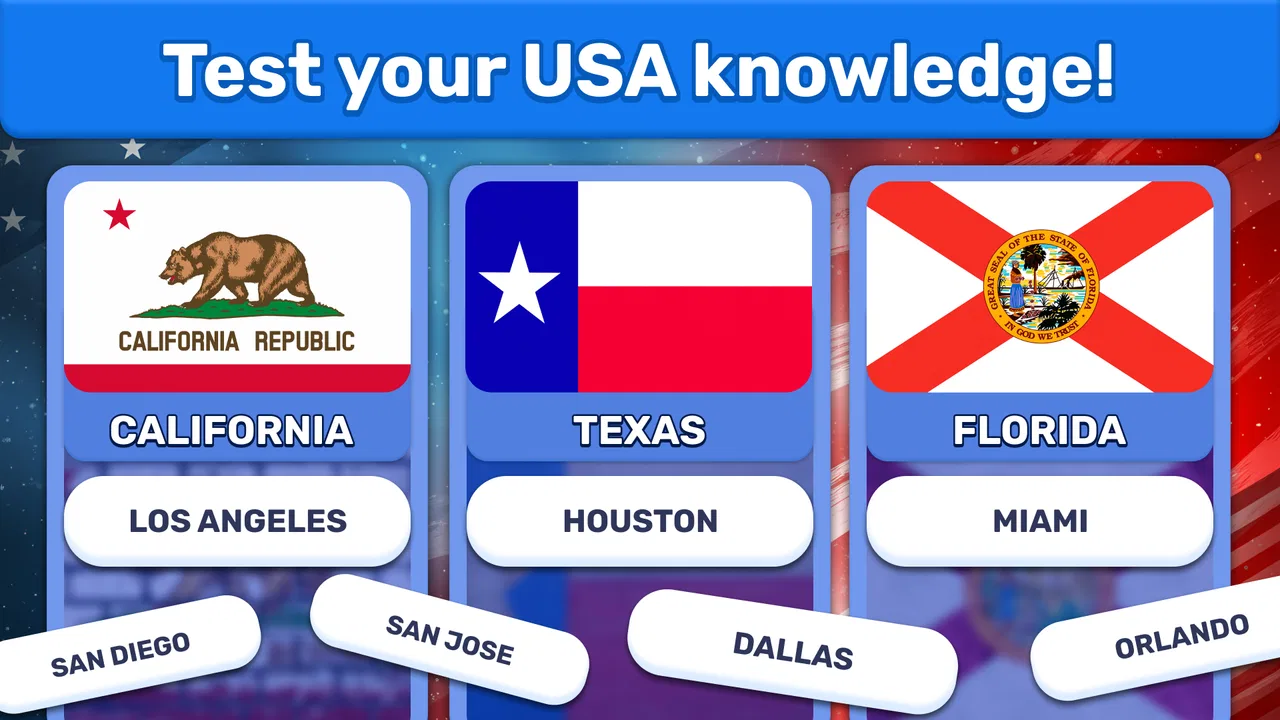
I found Power Of Knowledge most interesting as a quick trivia game that can fit into small gaps in the day without demanding the commitment of a long story-driven game. Its questions focus on geography, science and history, so the appeal comes from testing what I already know and noticing where my memory is less reliable. That makes it a better match for curious players who enjoy learning through short challenges than for anyone looking for a deep strategy system or a large social experience.
The game is free to start, is suitable for Everyone, and comes from Evrika Games LLC. Its 4.7 average from around 23 thousand ratings and more than a million installs suggest that it has found a broad audience. I would still treat those figures as a sign of popularity rather than a guarantee that every player will enjoy the same pace or presentation. Trivia is personal: some people want a relaxed knowledge check, while others want strict competition, detailed explanations or complete control over difficulty.
How the quiz feels to read and navigate
The central experience is easy to understand. You open the game, face a question, and use your knowledge to choose an answer. That direct structure is one of its strongest qualities because it avoids the learning curve found in games with several currencies, maps or complicated menus. I could imagine handing it to someone who does not regularly play mobile games and having them understand the basic purpose quickly.
You May Also Like

 Blood Strike: 2.5 Anniversary
Blood Strike’s Loadouts Turn Every Drop Into a Tactical Gamble
A close look at Blood Strike’s custom loadouts: how fast access to signature weapons reshapes its battle royale rhythm, rewards preparation, and narrows the gap between fights.

 Pandora - Music & Podcasts
Pandora’s Music Is Easy to Start, but Harder to Recover
Pandora’s strength is its low-effort path from a seed to a station. Its weak spot is how much confidence it asks you to place in connection, setup, and quiet recovery.

 8 Ball Pool
 Is Built on Rivalries, Rematches, and Routine
A close look at the rivalries, rematches, shared routines, and unanswered safety questions that turn a quick pool match into a persistent mobile community.

 Samsung Music
’s Quiet Strength Is Playing What You Already Own
Its reach comes less from spectacle than from dependable access to a personal library. That simplicity is both the app’s strongest retention engine and its ceiling.

 AccuWeather: Weather Radar
AccuWeather Review: A Quick, Clear Forecast for Everyday Decisions
For everyday plans, the best forecast is the one you can understand quickly. AccuWeather makes rain timing, radar, and local conditions easy to act on, with a few trade-offs.

 Hill Climb Racing
Why Hill Climb Racing Still Turns Crashes Into One More Run
A tiny car, a bumpy hill and one more upgrade: Hill Climb Racing keeps resurfacing because its simple chaos makes every near-miss feel personal.
More From Our News Desk



Readability matters more in a quiz than it does in many other genres. A player cannot answer fairly if the question is cramped, unclear or difficult to scan. In my experience, the best way to use this kind of game is to hold the phone at a comfortable distance, increase the device’s text size if the interface responds well to system settings, and avoid playing with glare across the screen. Those are simple adjustments, but they make a real difference when a question contains several lines or answer choices that need careful comparison.
The navigation is most useful when it keeps attention on the question rather than making the player search for the next action. Power Of Knowledge benefits from its focused trivia format: there is a clear reason to be on each screen. Still, people who need very large text, strong contrast or generous spacing should judge the interface on their own device before committing to extended sessions. A store description cannot tell you whether every label, answer button and piece of feedback will be comfortable for your eyesight.
I also recommend treating the game as a reading task rather than a purely reflex-based one. The subjects invite thought, and rushing can turn a question into a test of speed instead of knowledge. If you are playing with a child, an older relative or someone learning English, read the question aloud and allow extra time. That changes the experience from solitary tapping into a useful shared activity, even though the game itself remains a straightforward quiz.
Using the subject mix to your advantage
The combination of geography, science and history gives the game a practical advantage over trivia apps built around a single narrow theme. If I am tired of one subject, the next question can still feel different enough to reset my attention. It also makes the game suitable for mixed-age households, because one person may be stronger in historical facts while another has an advantage in science or maps.
That variety has a trade-off. Players who want a carefully structured learning course may find the movement between topics less satisfying than a dedicated history or science app. Power Of Knowledge works better as a broad knowledge workout than as a replacement for a textbook. I would use it to identify topics I want to explore later, not as my only source for studying an exam.
A useful habit is to keep a small note of questions you miss, especially when the answer surprises you. After a few sessions, the notes become a personal revision list. This is more effective than simply replaying until a fact feels familiar, because it shows whether the mistake came from forgetting, misreading or confusing two similar answers. The game supplies the prompt; the player has to create the deeper learning routine.
Access across different abilities and situations
For motor access, a quiz format is generally less demanding than a game based on rapid swipes, precise aiming or repeated button combinations. The main action is selecting an answer, so players with limited dexterity may find it comparatively manageable. I would not assume that it works equally well for every motor condition, though. The comfort of tapping depends on the size and placement of answer controls, the phone being used and whether the player can hold the device steadily.
One practical workaround is to rest the phone on a table or stand instead of gripping it throughout a session. That can reduce hand fatigue and make the screen easier to view. Short rounds are also preferable to forcing a long sitting. If reaching every part of the display is difficult, using the phone with the hand that has the best range of motion may help, but the game does not remove the need for physical interaction completely.
Sensory needs deserve equal attention. A trivia game can be mentally quiet compared with an action title, but the screen may still contain changing feedback, visual emphasis or other elements that some players find distracting. People sensitive to motion, flashing or busy presentation should test a short session and check whether the device’s own display settings make the experience calmer. I would avoid claiming that any particular accessibility mode is guaranteed unless it is clearly visible on the player’s phone and works as expected.
For players with hearing loss, the core of a written quiz is potentially more approachable than a game that communicates essential information through speech or sound effects. The important content is the question and the available answers. Even so, any optional audio or feedback should not be assumed to be irrelevant until you have tried the game. If a family is playing together, reading each question aloud can support someone who has difficulty seeing smaller text, while allowing another player to answer independently.
Players with cognitive or attention-related needs may appreciate the narrow objective: read, think and choose. That simplicity can reduce the number of decisions competing for attention. On the other hand, a timed or fast-moving presentation, if it feels demanding to a particular player, may create pressure rather than enjoyment. My advice is to use it in short, predictable sessions and stop after concentration starts to drop. Trivia loses its educational value when fatigue turns every question into guesswork.
When a phone, a break or another person changes the experience
Power Of Knowledge is well suited to situations where I have only a few minutes: waiting for an appointment, taking a break from work or relaxing before bed. It is also easy to imagine using it during a family gathering, with one person holding the phone and reading questions while everyone discusses possible answers. That shared approach is especially helpful for players who find small controls or dense text difficult, because participation does not have to mean tapping every answer personally.
It is less suitable when the phone is moving, the surroundings are noisy or attention is divided. Playing while walking, travelling on a rough route or handling another task makes reading harder and increases the chance of accidental taps. Someone who relies on uninterrupted concentration may prefer a quiet room, a stable surface and a larger screen if the game supports the device being used. These are not flaws unique to this title, but they affect whether the quiz feels accessible in real life.
The free entry point also makes it easy to try without making an immediate purchase. However, in-app items range from $1.99 to $69.99 each, so I would check every purchase screen carefully and consider whether spending adds meaningful value for my own play style. A player who only wants occasional questions can reasonably stay with the free experience. Someone tempted by repeated purchases should set a budget first, particularly if several family members share the same device.
Because the game is rated Everyone, it is a plausible choice for a household looking for general-interest trivia rather than mature entertainment. That rating does not tell a parent whether the reading level, pace or purchase prompts suit a particular child. I would play alongside younger users at first, not only to explain difficult facts but also to show them how to ignore or discuss optional spending. The educational tone is useful, but supervision remains sensible whenever a game includes in-app purchases.
Where the inclusive experience still has limits
The biggest barrier is that a quiz still depends on reading and interpreting language. A player with dyslexia, limited literacy, a visual impairment or a different first language may need support even when the questions themselves are interesting. Reading aloud, enlarging the phone display and discussing the wording can help, but those solutions may require another person. If independent access is essential, I would compare the game with a trivia app that explicitly documents screen-reader support, adjustable text, alternative input or other accessibility tools.
Knowledge gaps can also feel like access barriers. Geography, science and history cover a wide range of facts, and a player may encounter subjects that reflect a different educational background. Missing several questions in a row can be discouraging, especially if the game does not provide enough context to turn mistakes into explanations. I would frame the result as a prompt for curiosity rather than a judgment of intelligence, and use the missed questions as starting points for further reading.
Another limitation is the difference between accessibility and simplicity. A clean quiz layout may be easier than a complex game, but that does not automatically mean it supports every ability. A player who needs keyboard input, switch control, captions for all audio, high-contrast options or detailed timing controls should verify those needs directly on the intended device. I can recommend the game as comparatively approachable, not as a universal solution.
It is also not the right choice for every trivia fan. If you want live head-to-head competition, a specialist quiz platform with a large multiplayer community may be more satisfying. If you want explanations after every answer, a learning app designed around lessons may offer more depth. If you dislike broad subject changes or prefer a fixed difficulty curve, a focused category app will probably feel more coherent. Power Of Knowledge earns its place through convenience and variety, not through replacing every other kind of quiz experience.
Version, longevity and everyday value
The current version is 1.4.12, and the game requires Android 8.0 or later. That makes checking the operating system important before installing, especially on an older spare phone used by a child or relative. The requirement is modest for many modern devices, but compatibility is still part of accessibility: a game cannot help someone if their available phone cannot run it.
For me, the best routine is a short session followed by a pause to review the questions that caused hesitation. I would avoid treating the app as background noise while multitasking, because the value comes from thinking about why an answer is correct. On a commute, I would use it only when seated and able to focus. At home, I would put the phone on a stand and invite someone else to debate the answers. Those small choices make the same game more comfortable for different users.
I also like the possibility of using it as a conversation starter. A question about a place, scientific idea or historical event can lead to a discussion that lasts longer than the round itself. That is a stronger use case than endlessly chasing a score, particularly for families with different ages and abilities. A player who cannot comfortably tap every answer can still contribute by reasoning, recalling a fact or explaining a personal connection to a topic.
My criticism is that the broad format may feel lightweight to experienced trivia players. Once the novelty of familiar categories fades, some users will want more control over topic selection, difficulty and learning feedback than a compact mobile quiz normally provides. I would therefore install it with realistic expectations: it is a convenient general quiz, not a complete educational curriculum or a highly specialized accessibility product.
After spending time with it, I see Power Of Knowledge as a good recommendation for people who want approachable questions about geography, science and history, especially when they value short sessions and a free starting point. Its strongest inclusive quality is the low physical complexity of answering compared with action games, while its main weaknesses are the unavoidable demands of reading, screen comfort and personal concentration.
I would recommend trying it on the actual phone and with the actual player who will use it. Check whether the text is comfortable, whether tapping feels manageable, and whether the pace supports thoughtful answers rather than stress. If those basics work, the game can become a pleasant daily knowledge habit or a shared family activity. If you need documented support for a specific assistive technology, a more specialized quiz app may be the safer choice. For everyone else, Evrika Games LLC has made a broad trivia game that is easy to sample and worthwhile when used as a springboard for curiosity rather than as a final measure of what anyone knows.
FAQs for Power Of Knowledge : Trivia
01What is Power Of Knowledge: Trivia?
Power Of Knowledge: Trivia is an engaging app designed to test your knowledge across various subjects. It features hundreds of questions in categories like science, history, and pop culture. The app is perfect for trivia enthusiasts and offers both solo and multiplayer modes, allowing users to challenge friends or compete globally.
02Is Power Of Knowledge: Trivia free to use?
Yes, the app is free to download and play. However, it offers in-app purchases for additional features such as hints, ad-free experiences, and special question packs. These purchases are optional and enhance the gameplay without being necessary to enjoy the main features of the app.
03Can I play Power Of Knowledge: Trivia offline?
Power Of Knowledge: Trivia requires an internet connection to access its full range of features, including multiplayer modes and live question updates. While some basic questions may be available offline, the full experience, including leaderboard integration and new question packs, necessitates being online.
04How does multiplayer mode work in Power Of Knowledge: Trivia?
In multiplayer mode, you can compete against friends or other players worldwide. The app matches you with opponents based on your skill level. You can invite friends directly through the app or join random matches. Multiplayer rounds are timed, adding an exciting challenge to outscore your opponents.
05Are there educational benefits to playing Power Of Knowledge: Trivia?
Absolutely! The app is not only entertaining but also educational. It covers a wide range of topics, helping users improve their general knowledge and learn new facts. Regularly playing can enhance memory, cognitive skills, and even spark interest in new areas of learning.
Pros
- Wide range of trivia categories.
- Engaging and challenging questions.
- User-friendly interface design.
- Regular updates with new content.
- Supports multiplayer mode.
Cons
- Limited offline functionality.
- Ads can be intrusive at times.
- Some questions repeat frequently.
- In-app purchases can be pricey.
- Requires constant internet connection.

Power Of Knowledge : Trivia
Gallery